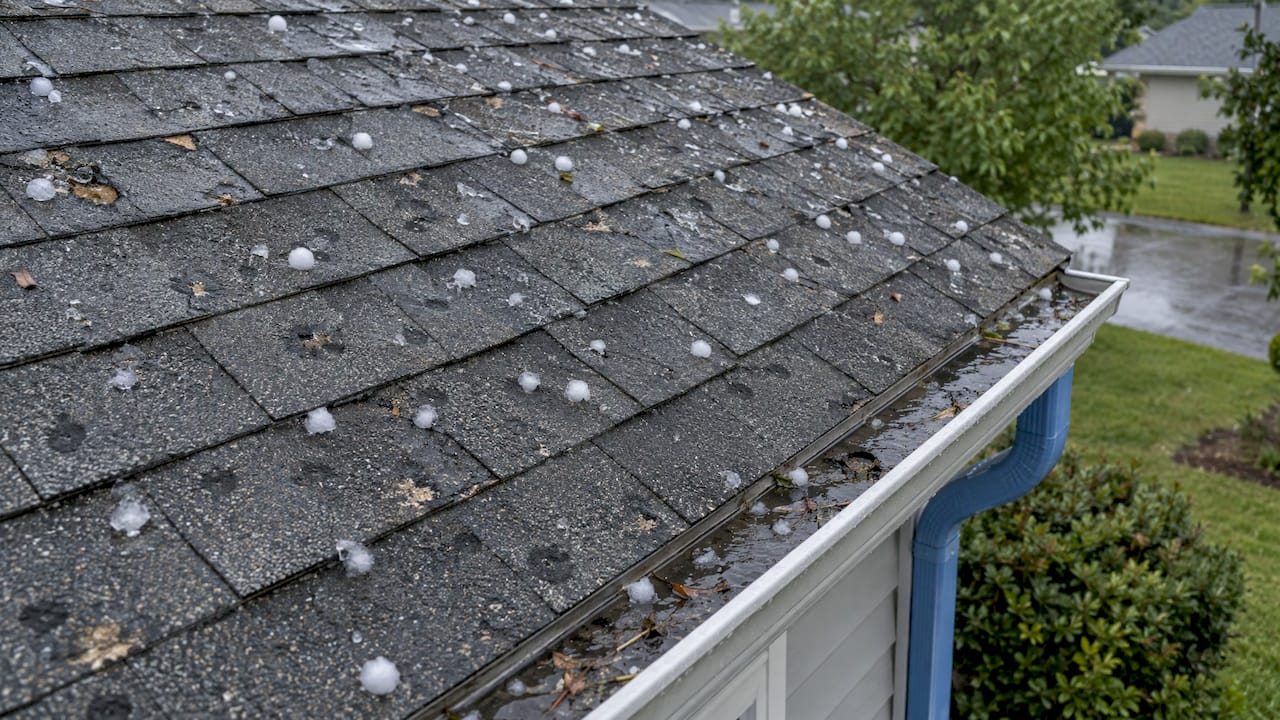
Forensic meteorology services give attorneys, insurers and businesses a qualified scientist who reconstructs what the weather actually was at a specific place and time, explains what it meant for the event in dispute, and, when needed, testifies to it. The work is most valuable when it starts early, particularly in ice and snow slip and fall cases, where conditions vanish within hours and the record of them is fragile.
TL;DR
- Forensic meteorology reconstructs past weather at a precise location and ties it to a claim, a loss or a lawsuit, using observations, radar, satellite data, modeling and, often, a site visit.
- In slip and fall cases, the analysis can address precipitation type and timing, temperature history, melting and refreezing, and what a property owner could reasonably have known.
- Retain the meteorologist early in discovery, so the analysis can shape the case theory, the records requests and the deposition questions instead of arriving after the key decisions are made.
- Public weather databases can be imprecise, so a credible analysis evaluates data quality and does not simply print a table of numbers.
- Cost and turnaround depend on scope, data availability and whether testimony is required.
Table of Contents
- What forensic meteorology services are
- When attorneys and insurers call a forensic meteorologist
- How a weather reconstruction is built
- Data sources and their limits
- Ice and snow reconstruction in slip and fall cases
- Retain the expert early in discovery
- What a forensic meteorology report contains
- Expert testimony and qualifications
- What affects cost and turnaround
- Beyond litigation: forecasting for events and operations
- Perspective
- Work with a certified consulting meteorologist
- FAQ
- Sources
What forensic meteorology services are
Forensic meteorology applies atmospheric science to questions of fact in legal and insurance matters. According to Physics Today's account of the field, the central questions can include what weather occurred, whether people could reasonably have known of impending weather, how a vehicle moved, and why an accident happened.
That range explains why the discipline is broader than a weather history printout. A raw data pull tells you that a station recorded 0.3 inches of precipitation. A forensic meteorologist tells you what form it took, when it began, how surface temperatures behaved around it, and what that sequence means for the surface where someone fell.
At WeatherPrep, our certified consulting meteorologists (CCM) handle this work alongside event forecasting, risk mitigation and emergency management consulting. If you are weighing what the CCM credential means for a case, our guide to what a certified consulting meteorologist is and when to hire one covers it in detail.
When attorneys and insurers call a forensic meteorologist
The typical triggers fall into a few groups:
- Premises liability. Slip and fall incidents on ice, snow or wet surfaces, where the duration and character of the weather bear on responsibility.
- Property insurance claims. Wind, hail, flood and freeze losses, where the question is whether a particular event reached a particular address and with what intensity.
- Vehicle and transportation incidents. Visibility, road surface conditions, wind and precipitation at the time of a collision.
- Construction and contract disputes. Weather delays, and whether conditions were truly outside what the schedule anticipated.
- Catastrophic events. Large storms where standard instruments may fail. A forensic meteorologist who worked on hundreds of Hurricane Katrina cases told Scientific American that many weather stations and tidal gages failed during the storm, so he relied on a storm surge model combined with Doppler radar data and on-site investigations to reconstruct timelines of damage.
For water-related losses, our article on flood damage assessment and what to document shows how the weather record fits alongside physical evidence.
How a weather reconstruction is built
A sound reconstruction is a process with distinct stages, and each stage should be visible in the final report.
- Define the question. The meteorologist and counsel agree on the exact location, the time window and what must be answered. A vague question produces a vague report.
- Gather the data. Sources include surface observations, radar, satellite imagery, analyses and forecasts. Physics Today notes that these are largely government-collected, and that records may be free or costly depending on the country.
- Evaluate the data. The meteorologist judges the veracity of each source, its distance from the site and its limits.
- Gather case facts. The same account describes practitioners collecting information about people, vehicles, buildings and eyewitness observations.
- Analyze and model. Research, modeling and testing fill in what no instrument measured at the exact spot.
- Visit the site when it matters. Scene conditions such as exposure, drainage, shade and surface type can change how the weather acted on the location.
- Report and, if required, testify.
The authors of the Physics Today piece stress that this is more than data retrieval: it combines evidence evaluation, scientific modeling and testing, and sometimes scene inspection. That is the standard we hold ourselves to, and the one we believe counsel should expect.
Data sources and their limits
Most U.S. historical weather analysis rests on public records. A July 2025 paper in the Journal of the National Academy of Forensic Engineers identifies two primary sources for forensic engineering evaluations: the National Weather Service Storm Prediction Center Local Storm Reports and the NCEI Storm Events Database. It also notes that both rely on reports from various sources and may sometimes provide imprecise or inconsistent data.
A study of hail illustrates why that matters. In Nelson Forensics' 2018 comparison of on-site data with weather data, only 44% of weather data agreed on hailstone size to within 0.5 inches, and the authors concluded that an on-site investigation is essential for determining approximate hail size at a given site. The lesson is not specific to hail. Any single data source can be wrong at your address, and the value of an expert lies in knowing which sources to weigh, which to discount and how to bridge the gaps.
In practice, this means a forensic report should show its work: which stations and radar sites were used, how far they were from the location, and why the conclusions follow from them.

Ice and snow reconstruction in slip and fall cases
Winter premises cases turn on details that an ordinary weather summary flattens. A daily total of snowfall does not say whether the snow stopped at noon or at midnight, whether the pavement was above or below freezing when it fell, or whether a thaw and refreeze produced black ice after the last shovel pass.
A meteorologist working on an ice or snow slip and fall reconstruction typically addresses questions such as:
- What type of precipitation fell (snow, sleet, freezing rain, rain), and exactly when did it begin and end at the address?
- How much accumulated, and how did temperature, wind and sunshine affect the surface afterward?
- Did conditions allow melting and refreezing between the end of the storm and the time of the fall?
- Was the storm forecast, and when were warnings and advisories issued, so that the question of what could reasonably have been known can be answered from the record?
- Do the photographs, incident reports and witness descriptions agree with the atmospheric record?
That last point deserves emphasis. The strongest analyses test the physical evidence against the weather data, and the weather data against the physical evidence. When the two agree, the opinion carries weight. When they diverge, you want to learn that early, not at deposition.
We provide this work to attorneys and insurers, including in New York and New Jersey, where winter storms regularly generate premises claims. Our forensic and expert witness services are described on our services page.
Retain the expert early in discovery
The most consistent advice we can give counsel is to bring in the meteorologist before the case is set. Early retention is the difference between an expert who shapes the case and one who is handed a conclusion to support.
Early involvement helps in several concrete ways:
- Evidence preservation. Photographs, surface treatment logs, snow removal records, surveillance video and maintenance contracts are easier to request and secure while they exist. A meteorologist can tell you which of them carry the most weather significance, so your requests are targeted.
- Case evaluation. A preliminary analysis can show whether the weather supports your theory before you invest in it. That is useful for plaintiffs and defendants alike.
- Site access. Visiting the location is simplest before conditions, landscaping or structures change. Scene factors can matter as much as regional data.
- Deposition preparation. An expert in the file can help frame questions for fact witnesses about when it snowed, when it stopped, and what they saw underfoot.
- Scheduling. Courts set expert disclosure deadlines, and retaining someone late leaves little room for data gathering, site work, drafting and revision. Check the scheduling order in your matter, and plan backward from it.
- Same-day analysis. When an early question needs a fast answer, a same-day preliminary review gives counsel a direction before commitments are made.
The practical rule: if weather is plausibly part of your case, speak with a meteorologist at intake or at the first discovery planning stage, not after the opposing side has already told its weather story.
What a forensic meteorology report contains
A useful report is written to be read by a judge, a jury or an adjuster, not only by another scientist. A published expert reporting guideline for forensic science says reports should state the objective, the examinations conducted, the results, the essential facts and assumptions, the opinions and conclusions, and any limitations, with appendices for tables, charts, data, calculations and photos.
In weather matters, that usually translates into:
| Section | What it should show |
|---|---|
| Assignment and scope | The question asked, the address, the time window |
| Data sources | Stations, radar, satellite, alerts and records used, with distances |
| Methods | How the data were evaluated and any modeling or testing |
| Findings | The weather conditions at the location, in plain language |
| Opinions | What the conditions mean for the issues in the case |
| Appendices | Tables, charts, imagery, photographs, curriculum vitae |
Expert testimony and qualifications
Qualification is decided by the court, and the standards vary by jurisdiction. One useful illustration is a professional regulator's guide: the APEGA guideline on licensed professionals as expert witnesses, written for Alberta, Canada, explains that a court determines qualification through a voir dire, considers specialized knowledge or experience, and limits testimony to the defined area of expertise. It also recommends a detailed, factual curriculum vitae consistent with the one submitted with the report, noting that qualifications, publications and prior work may be examined on cross-examination. U.S. courts apply their own rules, so confirm the standard in your jurisdiction with counsel.
The lesson holds anywhere: choose an expert whose credentials are accurate, specific and easy to verify, and who stays inside the area of expertise. A certified consulting meteorologist credential is one way to demonstrate it, and our guide to the CCM explains what it signifies.
What affects cost and turnaround
We bill per engagement, and we do not publish a fixed price list, because scope drives the work. These are the factors that move the figure:
- Scope of the question. One address and one afternoon is a different project than a multi-day storm across several sites.
- Data availability. Dense station coverage shortens the work. Sparse coverage, failed instruments or missing records call for more modeling.
- Site work. A scene visit adds time and expense, and often adds confidence.
- Deliverable. A preliminary consultation, a written report, an affidavit, deposition testimony and trial testimony each require a different level of preparation.
- Timeline. Compressed deadlines call for priority scheduling. Our rapid turnaround service exists for this situation, and starting early is the surest way to avoid needing it.
To discuss scope and timing for a specific matter, use the contact details on our services page.
Beyond litigation: forecasting for events and operations
The same discipline serves planning as well as disputes. Weather services for events typically include site-specific forecasts, alerts when thresholds are reached and support on location. The UK's Met Office describes its event offering as including hourly forecasts up to seven days ahead, on-site meteorologists and advice on site and date selection, and a U.S. report on PGA Tour events describes an on-site meteorologist issuing a forecast by 6 a.m., updating it through the day and alerting officials to schedule changes, suspensions and evacuations.

We provide event forecasting, in-person meteorologist support for outdoor events and logistics, risk mitigation reports for businesses and emergency management weather consulting. A documented forecast and decision record from an event can also become valuable evidence later, which is one reason planning and forensic work sit comfortably in the same practice.
Perspective
Attorneys often call us after the other side has already described the weather. By then, the useful options have narrowed. The best outcomes we see come from matters where the meteorologist was brought in while discovery was still wide open, when we could tell counsel which records to request, which witnesses to ask about the timing of the snowfall, and whether the weather supported the theory at all.
Slip and fall cases involving ice and snow are a clear example. The weather is gone within days, the surface is cleared or altered, and the evidence that remains is a handful of photographs, logs and recollections. A reconstruction built from validated data, a careful reading of those materials and, where possible, a visit to the site gives the case a scientific footing that a simple weather printout cannot.
That is why we pair certified consulting meteorologists with same-day analysis and direct access to the person doing the work. You should be able to talk to your expert early, often and plainly, and to understand every conclusion in the report before anyone else reads it.
Michael
Work with a certified consulting meteorologist
If weather may figure in a claim, a lawsuit or an upcoming deployment, WeatherPrep can help you define the question, secure the right data and deliver analysis that stands up under scrutiny. Our services cover expert witness testimony, forensic reports, event forecasting, risk mitigation, emergency management plans and rapid turnaround. Review them on our services page or start from our home page.

For slip and fall and other ice and snow matters, the sooner we are involved, the more we can do for your case.
FAQ
What does a forensic meteorologist do?
A forensic meteorologist reconstructs the weather at a specific place and time and explains what it meant for the matter at hand. That includes gathering and evaluating observations, radar and satellite data, running analyses or models where needed, writing a report and, if required, testifying.
When should an attorney retain a weather expert?
As early as weather is plausibly relevant, ideally at intake or the start of discovery. Early retention allows time to preserve records, visit the site, shape deposition questions and meet expert disclosure deadlines set by the court.
Can a meteorologist help in an ice or snow slip and fall case?
Yes. The analysis can establish the type, timing and amount of precipitation, the temperature history that affected the surface, and what forecasts and warnings were available. We compare those findings with photographs, maintenance records and witness accounts so the opinion fits the physical evidence.
Are public weather databases enough?
They are a starting point. Research from the forensic engineering field notes that the national storm report databases may sometimes be imprecise or inconsistent, so an expert evaluates each source and adds modeling or a site visit where the question requires it.
How is a forensic meteorology engagement priced?
We bill per engagement, and the price depends on scope, data availability, site work, the deliverable and the timeline. Contact us with the details of the matter and we will define the work before it begins.
Sources
- The art and science of forensic meteorology, Physics Today
- CSI: Mother Nature, Forensic Meteorology a New Growth Field, Scientific American
- Assessing Weather Event Damage in Forensic Engineering, Journal of the National Academy of Forensic Engineers
- Hail Sizing: A Comparison of On-Site Data with Weather Data, Nelson Forensics
- Expert Reporting Guideline, Forensic Science Communications
- Licensed Professional as an Expert Witness, APEGA
- Event management meteorological services, Met Office
- Why PGA Tour events have on-site meteorologists, SB Nation