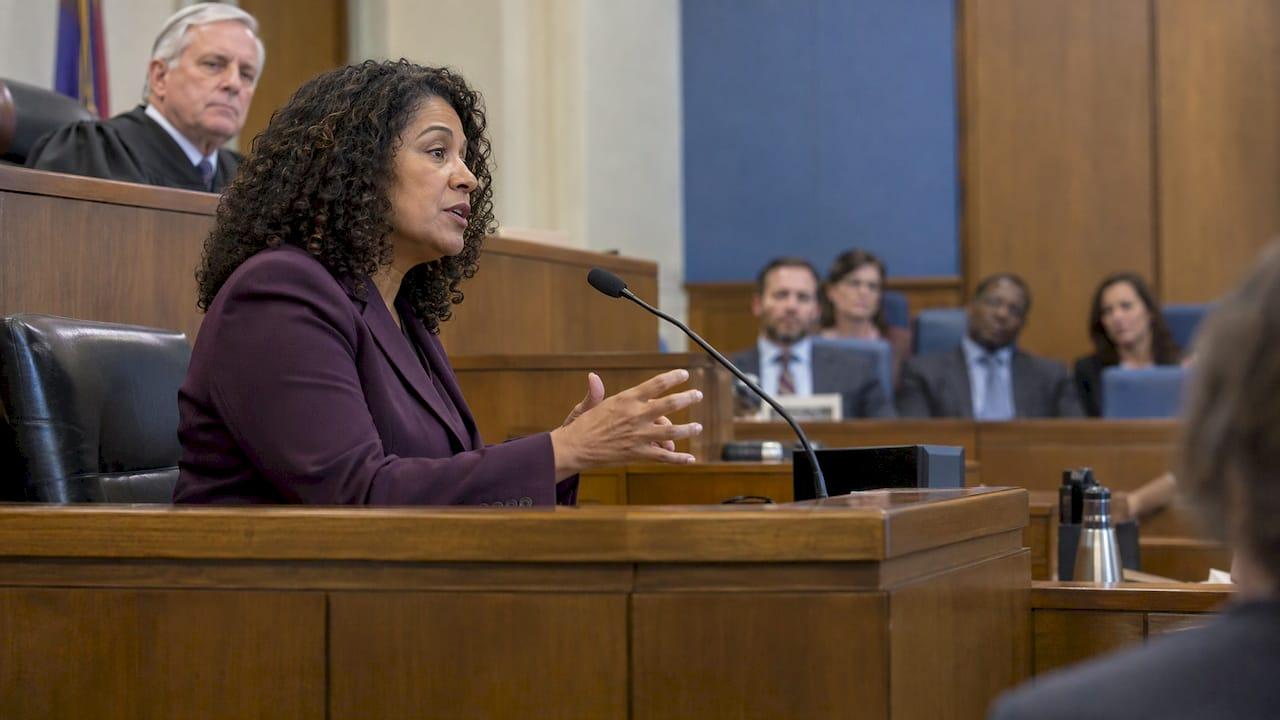
A weather expert witness is a qualified meteorologist who reconstructs the atmospheric conditions at a specific place and time, then explains in a report, deposition or courtroom what those conditions were and what they could and could not have caused. The work is retrospective: instead of predicting tomorrow's weather, the expert establishes what actually happened on the day of a fall, a crash, a collapse or a storm loss. This guide explains how that work is done, which disputes it fits, what to look for in a witness, and how reports and testimony are prepared, with attention to attorneys in New York and New Jersey.
TL;DR
- A forensic meteorologist reconstructs past weather for a given location and time, using certified historical data, and opines on what it means for the dispute.
- Typical matters include slip-and-fall cases, transportation accidents, hail, wind, snow and ice property claims, lightning losses and "Act of God" defenses.
- Look for documented meteorological training and experience, plus a professional certification such as the AMS Certified Consulting Meteorologist (CCM).
- National Weather Service employees generally cannot testify when the federal government is not a party, so private-sector experts fill the gap.
- New York courts apply the Frye standard, so the methods behind an opinion must be generally accepted in the scientific community.
Table of Contents
- What a weather expert witness actually does
- Disputes where weather evidence matters
- How the weather is reconstructed
- Qualifications to check before you retain a meteorologist
- From report to deposition to trial
- Admissibility in New York and New Jersey
- What affects cost and timing
- Work with a certified consulting meteorologist
- FAQ
- Sources
What a weather expert witness actually does
Forensic meteorology and forecasting share a body of science but answer opposite questions. A forecaster asks what the atmosphere will do. A forensic meteorologist asks what the atmosphere did at one address during one window of time, and whether that is consistent with the events a party alleges. A forensic meteorologist reconstructs past conditions for specific times and locations to support legal and insurance disputes, which is a different task from predicting future conditions.
In practice the engagement usually has three layers:
- Reconstruction. Gathering and reconciling observations, radar, satellite and other records to describe conditions at the site.
- Analysis. Translating those conditions into terms a judge, jury or adjuster can use: how much snow had fallen, whether freezing rain was occurring, how strong the gusts were, whether lightning was nearby.
- Communication. Writing a report and, where needed, giving deposition and trial testimony that is accurate, plain and defensible under cross-examination.
The ethical core of the role matters as much as the science. Writing in Physics Today, Elizabeth Austin and Peter Hildebrand emphasize that a forensic meteorologist's main ethical duty is to render opinions based solely on facts and to represent conclusions truthfully, whether or not the result favors the client. That standard is also what makes an expert persuasive: a witness who follows the data wherever it leads is far harder to impeach.
Disputes where weather evidence matters
Weather is a fact question in more cases than many attorneys first assume. NOAA's National Centers for Environmental Information notes that certified historical satellite, radar and surface-observation data can serve as evidence in slip-and-fall incidents, transportation accidents, and property damage from snow, ice, hail, high winds, tornadoes and lightning strikes.
The same NOAA publication also describes "Act of God" disputes, for example whether an unavoidable tornado caused a railway derailment and the resulting injury, death, or freight and property damage. In a case like that, the legal question turns on a scientific one: was the event truly beyond what could reasonably have been anticipated, and what was known beforehand?
Common matter types
| Matter | Question the meteorologist addresses |
|---|---|
| Slip and fall | Was there precipitation, freezing, or a thaw at the site, and when did it begin and end? |
| Vehicle and aviation accidents | What were visibility, wind, precipitation and road-surface conditions at the time? |
| Roof and property claims | Did hail or damaging wind occur at the address, and was it capable of causing the claimed damage? |
| Construction disputes | Did rain, wind or temperature exceed what a contractor could reasonably expect? |
| Lightning losses | Were strikes recorded near the property at the time of the loss? |
| Flooding | How much rain fell, over what period, and how does that compare with the damage pattern? |
For flood-specific questions, our guide to flood damage assessment and what to document explains what evidence is worth collecting early.
How the weather is reconstructed
The credibility of an opinion rests on its data and method. A careful reconstruction does not lean on a single source. It brings together several independent records, compares them, and states how confident each conclusion is.

NOAA's hail example shows the logic. NEXRAD radar data can help establish whether hail occurred, its size and location, and whether it could have produced the claimed roof damage. The opinion that results is not "it hailed somewhere nearby." It is a statement about the specific roof, on the specific date, and whether the evidence supports the loss as described. Hail claims also raise practical questions for the policyholder about what they will pay out of pocket, which a guide to the hail damage car deductible walks through.
When data is sparse
Not every site has a weather station next door. Modern reanalysis methods help here. NOAA scientists describe how techniques such as the ensemble Kalman filter allow reliable three-dimensional reconstructions of the atmosphere even when local, historical or upper-air observations are limited. A good expert explains where the observations are dense, where they are thin, and how that affects certainty.
What a sound method looks like
- Several independent data sources, cross-checked against one another.
- Certified records where certification is available, so the chain of custody is clear.
- Uncertainty stated openly instead of hidden behind a single confident number.
- Assumptions written down so opposing counsel can see exactly what the opinion depends on.
- Findings tied to the legal question being asked, not to a general weather narrative.
Qualifications to check before you retain a meteorologist
The retention decision often shapes the case. Legal teams should look for documented meteorological training and experience, and professional certification such as the AMS CCM. The CCM is a credential from the American Meteorological Society for practicing consultants; our overview of the Certified Consulting Meteorologist designation and when to hire one covers what it signifies.
Beyond credentials, a practical checklist helps:
- Education and field experience. Does the CV show real atmospheric science training and years of applied work?
- Forensic experience. Has the expert prepared reports for litigation or insurance matters, and have they testified?
- Relevant weather type. Winter weather, convective storms and tropical systems each reward different experience.
- Communication skill. Can the expert explain radar and surface data to a lay jury without oversimplifying?
- Availability and speed. Deadlines in litigation and insurance disputes are real, so turnaround matters.
Why not use a government meteorologist?
Attorneys sometimes ask whether a local National Weather Service forecaster can simply testify. Generally not. According to a Texas prosecutors' association journal, federal regulations prohibit NWS employees from testifying in cases where the federal government is not a party, which means legal teams must look to private-sector experts. The NWS data itself remains valuable, but an independent consulting meteorologist interprets it and stands behind the opinion.
From report to deposition to trial
The written report
A useful report is organized so that a judge or adjuster can follow it without a meteorology degree. According to a guide to expert testimony published through Mitchell Hamline School of Law, a report generally contains the expert's credentials and experience, the opinions and conclusions, and the bases for them. In our work this translates into a clear statement of the question asked, the data reviewed, the method applied, maps or charts where they help, and conclusions stated at the level of certainty the evidence supports.
Deposition and cross-examination
The same guide explains that deposition questions cover qualifications, opinions, reasoning, bases, sources and procedures. Cross-examination, in turn, may probe qualifications, bias, data, methods, reliability testing, alternative explanations and assumptions. Preparation therefore means more than rehearsing answers. The expert should be able to say why a data source was chosen, what an alternative source would have shown, and where the limits of the opinion lie.
Direct examination
Direct examination is carefully structured. The best direct testimony builds from credentials, to the data, to the method, to the conclusion, using visuals such as radar loops and timelines so jurors can see what the expert saw. Attorneys get the most from this phase when they share the legal theory early and let the meteorologist say what the data supports, whatever that turns out to be.
Admissibility in New York and New Jersey
Whether the opinion reaches the jury depends on the standard the court applies. In New York, courts continue to apply the Frye standard, under which the scientific principles or procedures behind expert testimony must be generally accepted in the relevant scientific community, as reflected in a decision involving a property insurance claim.
For weather work this is generally comfortable ground when the methods are conventional: certified observational records, standard radar interpretation, and established analysis techniques. It is where a method-first approach pays off, because an opinion built from well-accepted sources is easier to defend than one built on novel or undisclosed techniques. For New Jersey matters, confirm the current admissibility standard with the court rules that apply to your case, and brief your expert on it early.

What affects cost and timing
Forensic weather engagements are priced by the work involved. The main drivers are the expert's credentials, the complexity of the case, how fast the deliverable is needed, and whether testimony or travel is required. A single-date reconstruction for a slip and fall is a different scope from a multi-day storm analysis across several properties, and a case that proceeds to trial adds preparation and appearance time. At Wxprep, fees are billed per engagement or project, and we scope each one after hearing the questions the case needs answered.
Timing is the other variable. Weather records are most straightforward to gather soon after an event, and litigation deadlines rarely wait. Early contact lets the expert identify which data to preserve and which records to obtain before the analysis is due.
Our perspective
Most weather disputes are decided on whether someone can say, specifically and credibly, what the atmosphere was doing at one address at one time. Raw data does not do that on its own. A radar image or an observation table has to be interpreted by a certified consulting meteorologist who understands its limits and is willing to say where the evidence ends.
That is how we approach expert witness work. We reconstruct conditions from multiple sources, we state our conclusions at the level of confidence the data supports, and we write reports that attorneys, adjusters and juries can follow. Our same-day analysis capability means that when a deadline is tight, you have direct access to a meteorologist rather than a queue.
We also believe the work carries a responsibility beyond any single case. High-impact weather events are a growing concern for businesses, insurers and public agencies, and clear, honest meteorological analysis is part of how they prepare and how disputes get resolved fairly.
Michael
Work with a certified consulting meteorologist
If you are an attorney, claims professional or risk manager with a weather question that matters to a case, we can help. Wxprep provides expert witness testimony, forensic weather reports for legal and insurance matters, and rapid turnaround analysis from certified consulting meteorologists. See the full range on our services page and describe your matter so we can scope the right engagement.

For forensic reports specifically, start from our main site, where you can reach us directly.
FAQ
What is the difference between a meteorologist and a forensic meteorologist?
A meteorologist studies and forecasts the atmosphere. A forensic meteorologist applies that training to past events, reconstructing conditions at a specific time and place for legal or insurance purposes. The forensic role adds report writing, evidence handling and testimony skills.
Can a National Weather Service meteorologist testify in my case?
Usually not, unless the federal government is a party. Federal regulations bar NWS employees from testifying in other cases, so attorneys typically retain a private-sector consulting meteorologist who can interpret the official data and give an independent opinion.
What kinds of cases use weather expert testimony?
Common examples include slip and falls, vehicle and aviation accidents, hail, wind and snow-load property claims, lightning losses, flood disputes and "Act of God" defenses. Any case where conditions at a particular time are contested can benefit from a reconstruction.
What should a weather expert's report include?
It should state the expert's credentials, the opinions reached, and the bases for them, including the data reviewed and the methods used. A clear report also states the level of certainty and the assumptions behind each conclusion.
When should I contact an expert?
As early as possible. Early involvement helps identify which records to preserve, shapes the questions worth asking, and leaves time for a thorough report before litigation or claim deadlines.
Sources
- NOAA National Centers for Environmental Information: legal services sector sheet
- Physics Today: The art and science of forensic meteorology
- NOAA Climate.gov: Reconstructing Weather to Predict Climate
- Texas District and County Attorneys Association: Hiring a weather expert
- Mitchell Hamline School of Law: A Guide to Expert Testimony for Climate Scientists
- Santos v. State Farm Fire & Casualty Co., New York Supreme Court
- Vident Partners: What is a forensic meteorologist?
- Hail damage car deductible guide