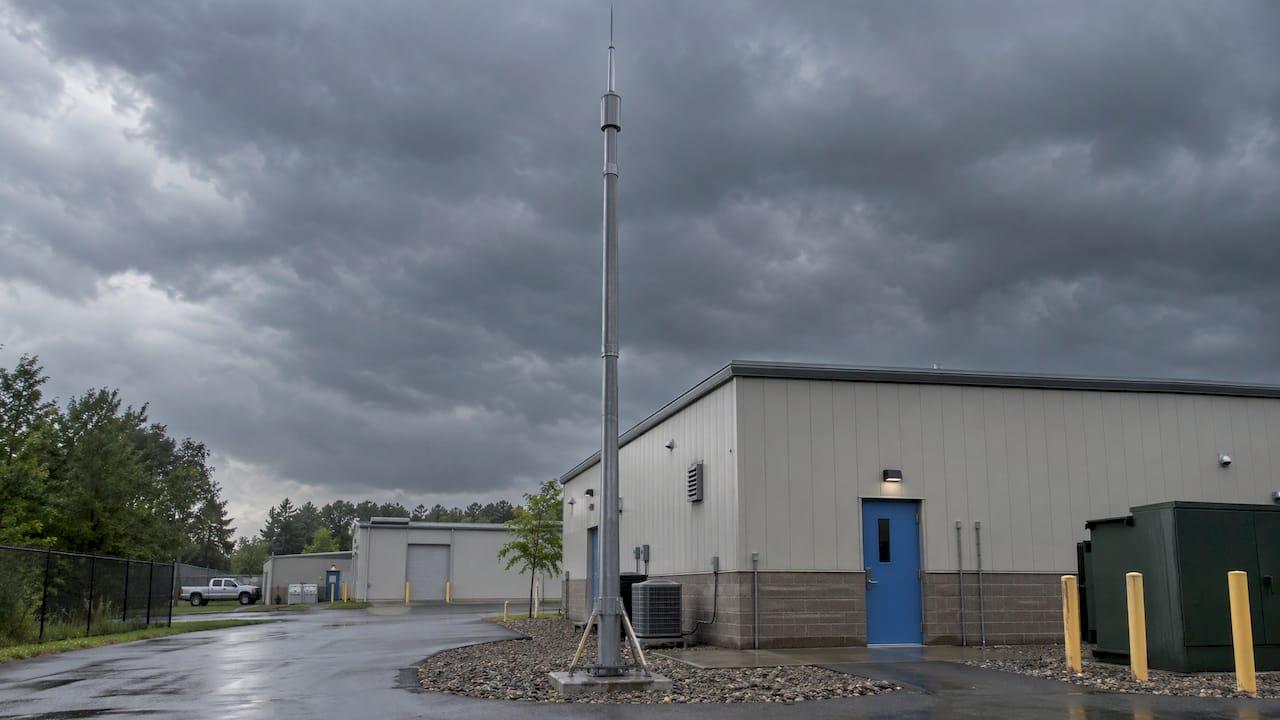
Lightning risk management is a written system, not a reaction: you assess the site, name who decides, set distance triggers tied to a lightning forecast and live detection, and define when work stops and when it resumes. Organizations that decide these points before the storm make faster, more defensible calls than those that debate them while it is overhead. A certified consulting meteorologist can turn a general forecast into the trigger decisions your plan needs, and we offer that through event forecasting and on-site support.
TL;DR
- Lightning kills about 20 people a year in the United States and injures hundreds more, so a plan is a duty-of-care document as much as a safety one.
- A workable plan has five parts: a risk assessment, a named decision-maker, detection and forecast sources, trigger distances, and stop and resume rules.
- Federal venue guidance uses 15, 12 and 8 mile radii as trigger points, with 8 miles as the minimum, because roughly 20 percent of strikes land beyond 8 miles.
- Wait until about 30 minutes after the last thunder or nearby flash before resuming.
- Record every decision with a time, source and name. That record matters most if an insurer or a court reviews the incident later.
Table of Contents
- Why a lightning plan matters beyond the direct strike
- Step 1: Assess the risk at your site
- Step 2: Name who decides
- Step 3: Set trigger distances and use a lightning forecast
- Step 4: Write the stop, shelter and resume rules
- Step 5: Protect temporary structures and equipment
- Step 6: Document decisions so they stand up later
- Who should do what
- Our perspective
- Put a meteorologist behind your plan
- FAQ
- Sources
Why a lightning plan matters beyond the direct strike
Most people picture a single bolt hitting a person. For an operator, the exposure is wider. Lightning can start fires, split masonry and chimneys, and send power surges into buildings through utility poles, communications cables, data lines and camera feeds. One industry white paper describes a bolt that struck the ground and traveled about three miles to a conductor, causing software faults, deleted data and electrical fires. That is a manufacturer's account, so treat it as an illustration of the mechanism, not a rate.
Three kinds of loss follow, and each needs a different control:
- People. Participants, staff and contractors outdoors, at the edge of a field, under a tent, or on a stage rig.
- Property and systems. Structures, power distribution, broadcast and control equipment, and anything wired to the outside.
- Continuity and liability. Delays, cancelled sessions, stalled construction or logistics, and later claims about whether the decision to continue or stop was reasonable.
The people risk is the one the rest of the plan is built around. The National Weather Service tracks lightning deaths each year, and its victim summary notes that survivors can suffer lasting neurological damage. A site that treats lightning as a nuisance delay is underestimating that.
Step 1: Assess the risk at your site
Start by deciding what you are protecting. The professional standards separate four kinds of loss: human life, loss of service to the public, loss of cultural heritage and economic loss. For an event or outdoor operation, human life is first and the others follow.

There are two levels of assessment, and which you need depends on what you run.
Structures and facilities. The Lightning Protection Institute describes the NFPA 780 method. A simple version uses a handful of factors to estimate how many strikes per year the structure can tolerate against how many it is likely to receive. If expected strikes exceed the tolerable number, a lightning protection system is recommended. A detailed assessment covers direct strikes, nearby strikes and strikes arriving through incoming services, and the LPI overview says it is normally done by a qualified professional. The Institute also stresses that every structure is unique.
Operations and people. This is the part event organizers, contractors and logistics managers own. Map where people actually are and when: spectator areas, parking, camping, load-in zones, crane or lift work, water and open fields. Note how long it takes each group to reach real shelter. That travel time sets how early your trigger must fire, which is the single most useful number in the whole plan.
Where a hurricane, derecho or flood also threatens the same site, build lightning into the broader plan. Our guides on severe weather planning and weather contingency planning cover how the pieces fit together.
Step 2: Name who decides
The most common failure is not a missing siren. It is that nobody has the authority to stop the show. The CISA lightning guide for sports and special events (May 2026) lists the minimum components of a plan, including a designated Weather Safety Official and an Authorized Decision-Maker, pre-identified lightning detection sources, and a rapid public alert method with pre-scripted messages. The CISA guide also includes cancellation and resumption procedures, staff training and occupant education.
Canada's federal guidance says the same thing in plainer terms: a knowledgeable monitor with authority to evacuate, delay or cancel. For a US operator, the practical version is a one-page role sheet:
- Weather Safety Official: watches forecasts and detection data and recommends action.
- Authorized Decision-Maker: the person who can say stop, with a named backup.
- Communications lead: sends the pre-written alert through every channel you use.
- Shelter marshals: move people and clear designated areas.
Separating the adviser from the decision-maker keeps the person with the revenue pressure from quietly overriding the person watching the radar. It also leaves a clean record of who decided what.
Step 3: Set trigger distances and use a lightning forecast

A trigger is a distance, a time or an observation that starts an action. Without them, plans fall back on judgment under pressure.
The CISA guide reports NOAA's recommendation of 15, 12 and 8 mile radii as trigger points for outdoor venues. The 8 mile ring is a minimum, because about 20 percent of strikes occur beyond 8 miles and bolts from the blue are possible. A common way to use the rings is graduated:
| Trigger | Typical action |
|---|---|
| Thunderstorms in the forecast for the event window | Brief the decision-maker, confirm shelters, stage the alert message |
| Lightning detected within about 15 miles | Prepare to stop, secure loads and equipment, begin moving people from the most exposed areas |
| Lightning within about 12 miles | Stop outdoor activity where shelter is more than a few minutes away |
| Lightning within 8 miles, or thunder heard | Everyone to shelter, no exceptions |
The radii are the federal reference points. Your own distances may need to be wider if your crowd takes a long time to clear, which is why Step 1 asked for travel times. One site policy from an agricultural science company, for example, requires evacuation of outdoor activity when lightning is detected within 10 miles and treats distant "heat lightning" as an immediate threat. That is a single operator's rule, but it shows how a site-specific number is written down and enforced.
What a forecast adds to detection
Detection tells you what is happening now. A forecast tells you how many minutes you have to act. A strike-detection feed alone will not tell a festival producer at noon whether the afternoon line of storms will arrive during headliner load-in or after the gates close. A meteorologist reading radar, soundings and model guidance can give a timed window, which lets you move the schedule instead of only stopping it. Canada's guidance makes the same point by recommending that activities be scheduled outside peak thunderstorm hours where possible. See our guides on festival weather forecasting and real-time weather monitoring for how triggers and monitoring are set up.
Step 4: Write the stop, shelter and resume rules
The National Weather Service's action plan template, as summarized in the CISA guide, directs three things: stop activity when lightning is seen or thunder is heard, move to an enclosed structure or hard-topped vehicle, and do not resume until about 30 minutes after the last thunder. Environment and Climate Change Canada gives the same 30-minute rule for outdoor venues. Each new flash or rumble restarts the clock.
Write each rule so it can be carried out by a tired staff member at 9 p.m.:
- Safe locations. Name them. An enclosed building with plumbing and wiring, or a hard-topped vehicle. Tents, open pavilions, dugouts and golf-cart shelters are not safe locations.
- Pre-scripted announcements. Write the stop message, the shelter message and the resume message ahead of time, and list every channel: PA, sirens, text or email, social media and staff radios.
- Capacity. Check that shelters can hold the people assigned to them, and that the routes are clear and signed.
- Resume authority. Only the Authorized Decision-Maker gives the all-clear, after the 30-minute wait has run. The site policy cited above takes the same approach, giving the all-clear to a single named person.
- Cancellation criteria. Decide in advance when a delay becomes a cancellation, so that the call is not negotiated with sponsors in the moment.
For large venues, the NWS Lightning Safety Toolkit describes a voluntary recognition program that asks for on-site lightning detection or a commercial notification service, a written plan, several public notification methods, shelter provisions with signage and patron education. Even if you do not apply, it is a useful checklist for what a reviewer would expect to see.
Step 5: Protect temporary structures and equipment
People come first, but equipment is the second loss. Stages, truss, towers, tents, generators and distribution racks are exposed, and their cabling can carry a surge a long way. Extension-service guidance explains that lightning commonly enters through metal roofing, nearby trees and incoming power or wire lines, and recommends arrestors at the electrical service entrance with proper grounding. Permanent facilities should have these reviewed under the structure assessment in Step 1.
For temporary production, the issue is the shutdown sequence as much as hardware: who powers down what, who clears the stage and rigging, and when crews may return. If you are building crews and show control around those steps, this overview of live event production basics explains the roles on a live production floor. Put the lightning shutdown order in the production schedule, not in a separate document nobody opens.
Step 6: Document decisions so they stand up later
A lightning plan has a second audience: the insurer, the claims adjuster and sometimes opposing counsel. After an injury, a cancelled show or damaged equipment, the question is rarely whether lightning occurred. It is what the organizer knew, when, and what it did about it.
Keep a simple log for every event or shift:
- the forecast received, with time and source;
- each detection reading and the distance at which a trigger fired;
- the time the stop order was given and by whom;
- the time of the last thunder or nearby flash, and the time the all-clear was given;
- photos or screenshots of radar and detection displays;
- any deviation from the plan and the reason.
That log serves three needs. It supports an insurance claim with timed facts instead of recollection. It shows an investigator that the plan was followed. And it lets you review the plan after the season and adjust triggers that were too tight or too loose.
When a loss does occur and the weather itself is disputed, a forensic analysis can reconstruct what lightning activity occurred at a location and time from archived data. We explain what that includes in forensic meteorology services, and the same approach applies to construction weather delay claims.
Who should do what
| Task | Owner |
|---|---|
| Site and structure assessment | Qualified lightning protection professional |
| Event and operations risk assessment | Organizer or safety manager, with meteorological input |
| Timed forecast and trigger guidance | Consulting meteorologist |
| Stop, shelter and resume decision | Authorized Decision-Maker |
| Incident record and review | Safety manager |
| Weather reconstruction for claims or testimony | Forensic meteorologist |
Our perspective
Most lightning plans we would want to improve fail at the same place: the trigger is written as a distance, but nobody has translated it into time. Eight miles means something very different for a storm moving at 15 miles per hour than for one moving at 40, and a crowd that needs twenty minutes to clear cannot wait for the 8 mile ring.
That is why we think the forecast belongs inside the plan, not beside it. Our certified consulting meteorologists provide event forecasting and on-site meteorology support, so the person reading the storm can sit with the decision-maker and talk through timing, and we offer same-day analysis when conditions change quickly.
The same discipline carries into forensic work. If a loss occurs, a clear record of what was forecast, what was detected and what was decided is the strongest foundation for an insurance review or testimony, and our forensic reports and expert witness services are built to work from that kind of record.
Michael
Put a meteorologist behind your plan
If you run outdoor events, logistics or field operations in New York, New Jersey or elsewhere, we can provide event forecasts, on-site meteorology support and emergency weather plans tailored to your site and schedule. For legal and insurance teams, we prepare forensic weather reports and expert witness testimony. Details are on our services page.

For a closer look at the work and recent weather events, see our latest news.
FAQ
How far away should lightning trigger a stop?
Federal venue guidance reported by CISA uses 15, 12 and 8 mile radii as trigger points, with 8 miles as the minimum. That minimum exists because about 20 percent of strikes occur beyond 8 miles. If your crowd needs a long time to reach shelter, set the first trigger at the wider ring.
When is it safe to resume after lightning?
The National Weather Service template and Canadian federal guidance both say to wait until about 30 minutes after the last thunder. A new flash or rumble restarts the 30 minutes. One designated person should give the all-clear.
Do we need a formal lightning risk assessment?
For permanent structures and critical facilities, the Lightning Protection Institute describes NFPA 780 assessments, with detailed ones normally done by a qualified professional. For events and field operations, a documented site and operations assessment with named roles and triggers is the working standard in the federal guidance.
Can a meteorologist help after lightning has caused a loss?
Yes. A forensic meteorology report can establish the weather at a specific place and time for an insurance claim or a legal matter, and an expert witness can explain it to a court. A decision log from the day makes that analysis stronger.
Sources
- NWS: Lightning Victims
- CISA: Lightning Safety Guide for Sports and Special Events
- Lightning Protection Institute: Risk Assessment Overview
- Environment and Climate Change Canada: Lightning safety for outdoor venues
- NWS Lightning Safety Toolkit for Outdoor Venues
- Corteva Woodhull site lightning policy
- Lightning Protection Systems, Safety, Health and Wellness
- How Lightning Impacts Business and Electronic Systems
- Live event production basics for stagehands