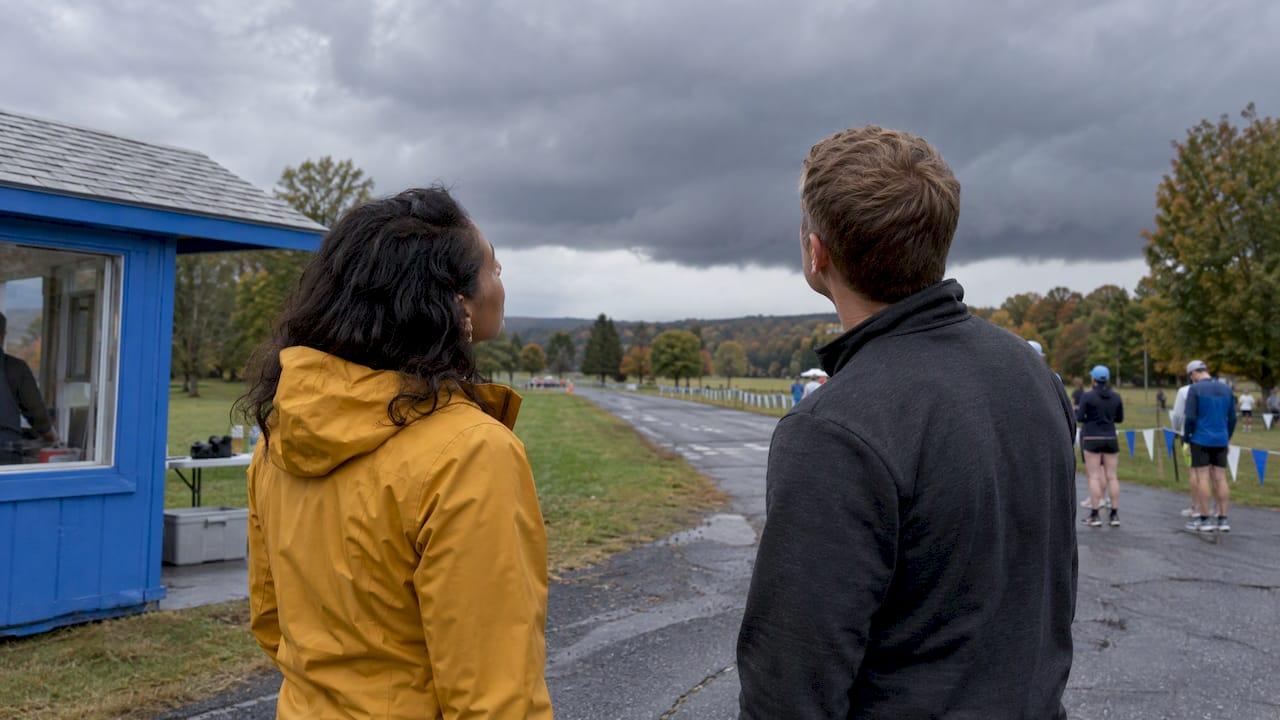
Meteorological consulting services give you a certified meteorologist's analysis of weather for a specific place, time and decision: a forecast built around your event, a reconstruction of what the weather did on the day of a loss, testimony in court, or a risk assessment for your operations. A public forecast tells you what the sky is likely to do. A consultant tells you what it means for your site, your schedule or your case, and can stand behind that analysis. At WeatherPrep, our certified consulting meteorologists (CCMs) provide same-day analysis and customizable services across event forecasting, forensic reports, expert witness work, risk mitigation and emergency planning.
TL;DR
- A consulting meteorologist turns weather data into a decision or a defensible opinion, for your event, claim, case or operation.
- Event teams get venue-specific forecasts, thresholds and updates through pack-down. Insurers and lawyers get reconstructions of past weather, reports and testimony.
- Check credentials first: the AMS Certified Consulting Meteorologist (CCM) designation is the recognized U.S. benchmark.
- Raw storm-report databases and nearby station data are imprecise, so the quality of the analysis matters more than the quantity of data.
- Tell the consultant early what decision or question the work must support, and ask for same-day turnaround when time is short.
Table of Contents
- What meteorological consulting services include
- How a consultant differs from a routine forecast
- How consultants support events, logistics and extreme-weather decisions
- What forensic meteorology delivers to insurers and lawyers
- Notes for lawyers in New York and New Jersey
- How to evaluate a meteorological consulting company
- Which service fits your situation
- Perspective
- Talk to a consulting meteorologist
- FAQ
- Sources
What meteorological consulting services include
A consulting engagement is built around a client question, not a weather product. The work usually falls into five groups.

Event and operations forecasting. A forecast for a festival, race, concert, construction pour or shipping window, tuned to the venue and the hours that matter, with the weather conditions that would change your plan named in advance.
Forensic weather analysis. A reconstruction of the weather at a specific location and time in the past, for an insurance claim, a lawsuit or an investigation.
Expert witness testimony. The same analysis presented in a deposition or at trial, by a meteorologist who can explain it to a judge or jury.
Risk mitigation and climate adaptation reports. An assessment of how extreme weather, such as wind, flooding, heat, snow or ice, exposes a business, facility or supply chain.
Emergency management weather support. Forecast guidance and planning for agencies and organizations that must act on severe weather.
How a consultant differs from a routine forecast
A free app or a national forecast covers a broad area and speaks in probabilities that apply to nobody in particular. A consultant works the other way around. You describe the decision, and the meteorologist chooses the data, the models and the observations that answer it.
Three differences matter in practice:
- Specificity. The analysis is for your venue, parcel or route and for the window you care about, not a metro area.
- Interpretation. You receive guidance on what the weather means for your operations, such as when to hold a load-in, when to pause a crowd activity or whether a storm could have produced the damage claimed.
- Accountability. A named professional signs the work. For legal and insurance use, that matters as much as the content.
Speed is part of the service as well. Weather decisions rarely wait, which is why same-day analysis is central to how we work.
How consultants support events, logistics and extreme-weather decisions
Event weather support is more than a good forecast. One well-documented model is the one New Zealand's national weather service describes for events: detailed venue forecasts several days ahead, pre-agreed impact thresholds, regular updates through pack-down, one-on-one phone briefings, real-time lightning detection with risk zones and all-clear alerts, and a color-coded matrix of hazard likelihood and severity. The pattern holds anywhere: define in advance what weather would change your plan, then watch for it.
For an organizer, that translates into a short list of deliverables to ask for:
- A forecast for your site and your hours, updated as the event approaches.
- Written trigger points, for example a lightning distance, a sustained wind speed or a rainfall total, each tied to an action and an owner.
- A direct line to the meteorologist for questions on the day.
- A post-event record of what the weather did, useful if an incident or insurance question follows.
Our guides on festival weather forecasting, weather contingency planning and severe weather planning walk through how to set those triggers and build the plan around them.
Remote analysis or an on-site meteorologist
Most decisions can be supported remotely: a forecast package, scheduled briefings and a phone line cover the majority of events and logistics operations. An in-person meteorologist makes sense when the stakes and the pace justify it: a large outdoor event with crowds in the open, a multi-day build with crane or tent work, or a site where conditions change faster than a briefing cycle. If you are unsure, describe the event, the site and the hazards, and we will say which setup fits.
What forensic meteorology delivers to insurers and lawyers
A forensic meteorologist reconstructs the weather at a specific time and place, evaluates the records and other evidence, and may produce a report or testify in a legal case. The sources include surface observations, radar, satellite data, analyses and forecasts, and the work can also involve eyewitness accounts, vehicles, buildings or the scene itself.
Typical questions the work answers:
- Did a hailstorm, wind event or flood reach this property on the claimed date, and how severe was it?
- Were road, ice or visibility conditions a factor in a slip, fall or crash?
- Was a forecast available, and what did it warn of?
- Did conditions on the day match what a party describes?
For a deeper look, see our pages on forensic meteorology services and the weather expert witness role. Our forensic reports are prepared by certified consulting meteorologists.
Why the data's limits shape the report
A credible report treats the data critically. A 2025 article from the National Academy of Forensic Engineers cautions that storm-report databases can hold imprecise or inconsistent entries and recommends combining them with other observations. A 2018 hail-size comparison found that only 44% of weather-data comparisons agreed within half an inch of hail size, and 18% differed by more than an inch, which is why on-site evidence belongs beside the weather data. Hail is a useful example because size drives damage decisions, and guidance on hail size and roof damage shows how much a few tenths of an inch can matter to an inspection.

The lesson for insurers and attorneys: one database printout is a starting point. A defensible opinion lays out which sources were used, how they were cross-checked and how the conclusion follows. Satellite products are one input among several, and our guide to satellite weather data explains what they measure.
Notes for lawyers in New York and New Jersey
If you are preparing a weather-related case in New York or New Jersey, three practical points apply.
Engage early. Weather records are easiest to collect and preserve soon after the event. An early reconstruction can also tell you whether the case is worth pursuing before costs mount.
Expect scrutiny of method. States differ on how they test expert evidence, and some still use a modified version of the Frye general-acceptance standard while federal courts apply Rule 702. Confirm with your own counsel or the court's rules which standard governs your matter. A consultant who documents sources and methods in the report makes that scrutiny easier to meet.
Use official records where certification matters. Some federal data providers say they cannot issue certified copies, for example the National Data Buoy Center, so ask your meteorologist which sources can be certified and from where before a deadline approaches.
How to evaluate a meteorological consulting company
Six checks cover most hiring decisions:
- Credentials. The American Meteorological Society runs a Certified Consulting Meteorologist program for professionals who advise clients, and the designation is the recognized U.S. benchmark for the work. Our guide, what a CCM is and when to hire one, covers it in detail.
- Match to your need. Event forecasting, forensic reconstruction and climate risk work are different skills. Ask who on the team will do your type of project.
- Direct access. You should be able to speak to the meteorologist who wrote the analysis, not only receive a document.
- Turnaround. Ask how fast an urgent question is answered. Same-day analysis is a design feature of our service.
- Transparent method. The report should name its data sources and explain how they were reconciled.
- Scope and fee. Consulting is billed per engagement or project, so agree on the question, deliverables and timeline up front.
Professional bodies worldwide treat competence as something to be demonstrated. The WMO publishes competency frameworks for operational meteorological personnel covering knowledge, skills and performance criteria. A credential and a clear scope give you the same assurance in a hiring decision.
Which service fits your situation
| Your situation | Service that fits | What you receive |
|---|---|---|
| Outdoor event, race, festival or build | Event forecasting, optionally with on-site support | Venue forecast, thresholds, updates and a direct line |
| Property or casualty claim tied to a storm | Forensic report | Reconstruction of weather at the loss location and date |
| Litigation involving weather | Forensic report and expert witness | Analysis, written opinion and testimony |
| Facilities or supply chain exposed to extreme weather | Risk mitigation report | Assessment of hazards and recommended adaptations |
| Agency or organization acting on severe weather | Emergency management consulting | Forecast guidance and planning support |
Perspective
Most weather problems we are asked about are not forecasting problems at their core. They are decision problems. An organizer needs to know when to clear a field. An adjuster needs to know whether a storm reached a roof. An attorney needs an opinion that holds up under questioning.
That is why we pair certified consulting meteorologists with a same-day turnaround and services that can be customized to the question. The data are only the raw material. What clients value is the interpretation: what the weather means for this site, this loss, this plan.
If you are weighing whether a project justifies a consultant, our advice is to bring the question early. Early involvement lets us collect records while they are fresh, set thresholds before the pressure builds and give you a clear answer when it counts.
Michael
Talk to a consulting meteorologist
WeatherPrep provides event forecasting, forensic reports, expert witness testimony, risk mitigation reports and emergency management weather consulting, with rapid turnaround available. Tell us the event, claim or case and the date that matters, and we will scope the analysis. See all services or start from our home page.

FAQ
What does a meteorological consultant do?
A meteorological consultant analyzes weather for a particular client question. That can mean a tailored event forecast, a reconstruction of past weather for a claim or lawsuit, testimony, or an assessment of extreme-weather risk. The output is guidance or an opinion, not a generic forecast.
When should an event organizer hire one?
Hire one when weather could change safety, cost or scheduling, such as large outdoor crowds, temporary structures or multi-day builds. Bring the consultant in before you finalize the plan so that thresholds and actions are set in advance. On-site support suits high-stakes events where conditions shift quickly.
Why does the CCM designation matter?
The CCM designation from the American Meteorological Society identifies meteorologists who advise clients professionally. For insurers and attorneys it is a fast way to confirm a consultant's standing before engaging them for a report or testimony.
How is a forensic weather report used?
Insurers use it to confirm what weather occurred at a location and date, and lawyers use it as the basis for an opinion in a case. It draws on observations, radar, satellite data and other evidence, and a meteorologist can present it as testimony.
How are consulting fees set?
Consulting is typically billed per engagement or project, so the fee depends on the question, deliverables and timeline. Contact us with your details and we will scope the work.
Sources
- Events, About MetService (New Zealand)
- The art and science of forensic meteorology, Physics Today
- Assessing Weather Event Damage in Forensic Engineering, NAFE Journal
- Hail Sizing: A Comparison of On-Site Data with Weather Data
- Hail Size and Roof Damage: When to Inspect and Act
- Federal Rule 702: What Constitutes Expert Witness Testimony
- NDBC: How can I get data certified for use in a court of law?
- AMS Certified Consulting Meteorologist Program
- Compendium of WMO Competency Frameworks